
Thoughtful guidance for learning, therapy, and family life.
Explore practical blog stories shaped around our school programs, classroom routines, parent support, and therapy services. Each post is written to help families make confident next steps for their child at home and at school.
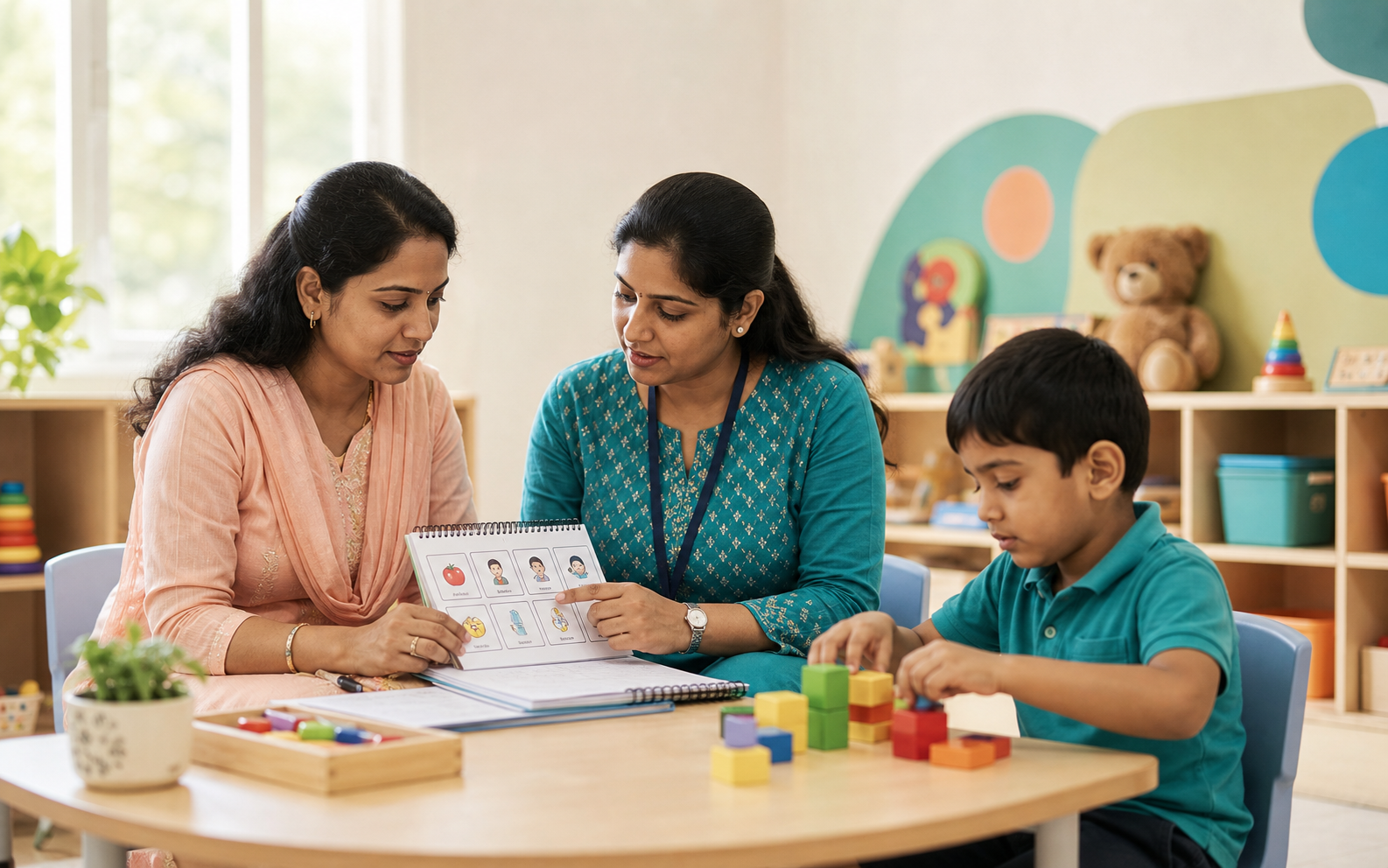
How home and school can move together for a child’s progress.
Consistency matters. This featured post shares a simple way to align routines, therapy goals, communication habits, and emotional support so a child receives the same encouraging message in every environment.
Fresh stories from the Pavani community
Use the filters to browse topics that matter to your family now, from speech and occupational therapy to school readiness, admissions, independence, and everyday routines.
Building a strong home-school partnership that children can feel
Children do best when adults around them move with the same calm rhythm. This post explains how parents and teachers can share goals, language, and routines without making family life feel clinical.
A child notices consistency long before they can describe it. When a teacher, therapist, and parent respond with similar language, similar expectations, and similar encouragement, daily life becomes easier to understand. That shared structure lowers anxiety and helps the child use their energy for learning rather than decoding mixed signals.
At Pavani Autism School, parent partnership works best when it stays practical. Families do not need complicated charts every evening. Instead, a strong rhythm often begins with three shared focus points: one communication goal, one independence goal, and one emotional regulation goal. When home and school both reinforce those same targets, children get more chances to practice and succeed.
Simple habits make the partnership feel supportive rather than overwhelming:
- Use one or two common phrases for transitions, encouragement, and calming routines.
- Celebrate small wins quickly so progress feels visible.
- Share patterns, not just problems, such as what time of day a child seems most settled or what activity brings the strongest focus.
The goal is not perfection. The goal is a child who experiences adults as coordinated, trustworthy, and encouraging. When that happens, confidence grows, routines become smoother, and progress feels more natural for everyone involved.
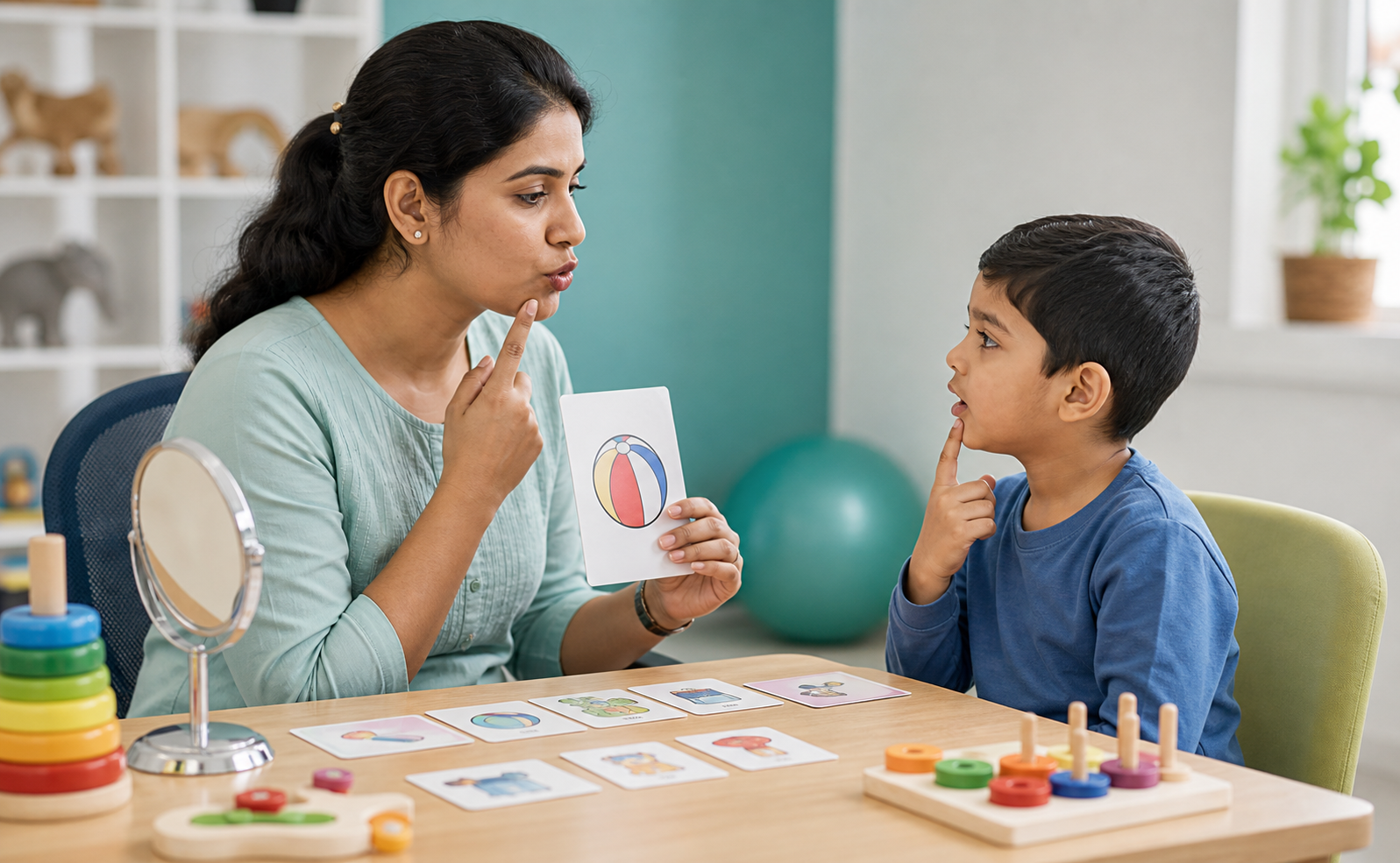
How speech therapy helps children find clearer ways to connect
Speech therapy is about more than words. It supports listening, requesting, turn-taking, expression, and the confidence children need to engage with people around them.
Families often hear the term speech therapy and think only about pronunciation. In reality, communication is much wider than that. A child may need support with attention, listening, gestures, requesting help, answering simple questions, or feeling comfortable enough to start an interaction.
That is why speech therapy at school works best as part of everyday life. The strongest progress usually happens when communication goals are practiced inside play, transitions, music, visual routines, and classroom activities. Children learn that communication is not a separate exercise. It is the tool they use to get needs met, join others, and express what they feel.
Parents can support progress by slowing down their own language, leaving space for responses, and celebrating every meaningful attempt to communicate. A child who feels successful will try again. Over time, those repeated attempts become more purposeful, more confident, and more independent.
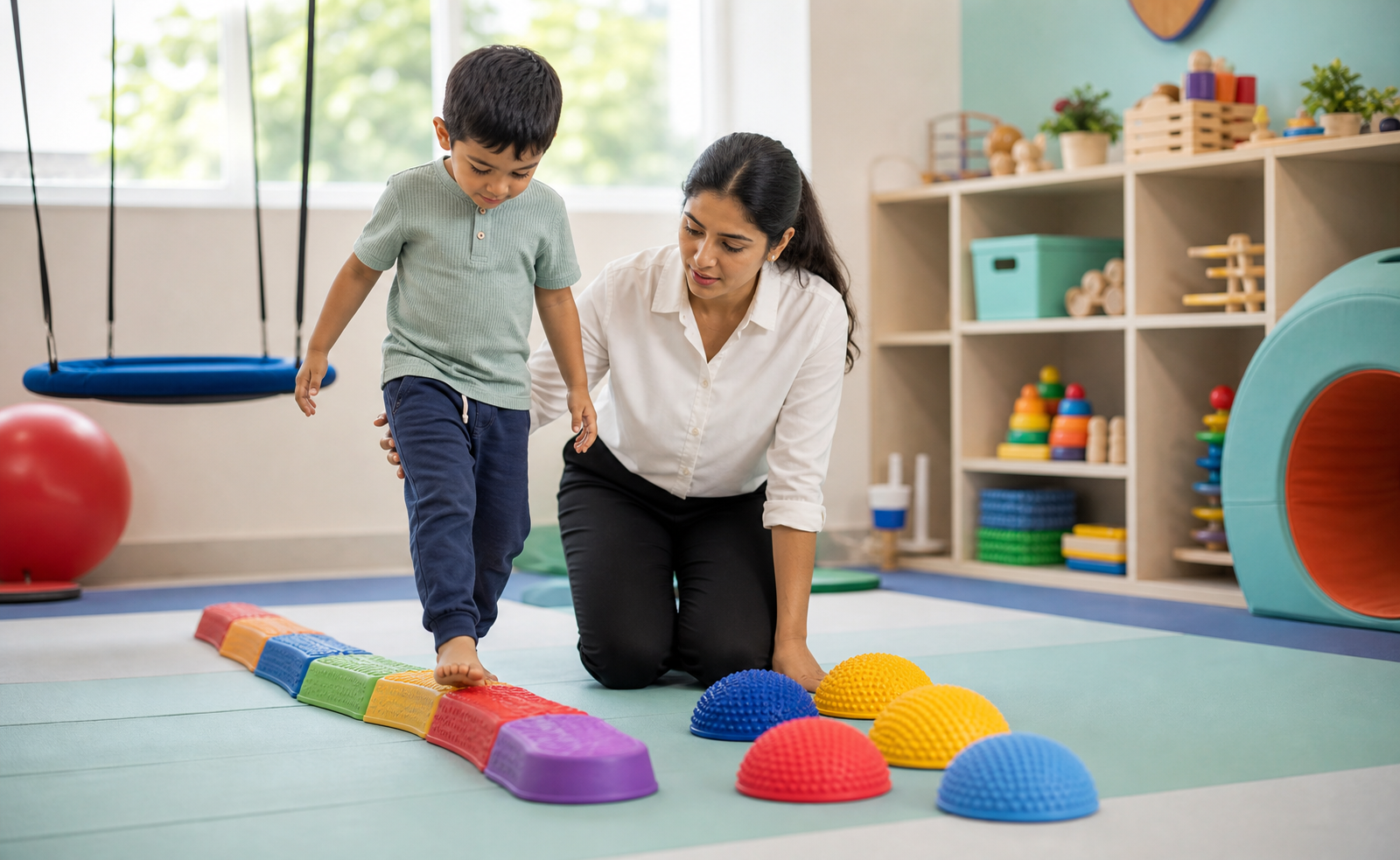
What occupational therapy looks like inside a real school day
Occupational therapy supports attention, body awareness, transitions, and participation. It helps children do more of the ordinary things that make school life meaningful.
Occupational therapy is often misunderstood as a narrow motor-skill session, but in a school environment it touches many parts of a child’s day. Sitting with more stability, tolerating textures, moving through transitions, holding attention long enough to finish a task, or managing sensory input in a busy room are all areas where occupational therapy can make a visible difference.
Children rarely experience progress as one dramatic leap. Instead, therapy helps them build a collection of small capacities that support learning: better posture during table work, stronger coordination during play, calmer responses to unexpected sensory input, and more confidence in trying new experiences.
When OT goals are woven into classroom routines, children practice skills in the exact places where they need them. That is what makes therapy feel useful. It becomes part of the child’s real day, not a disconnected activity that ends when the session is over.
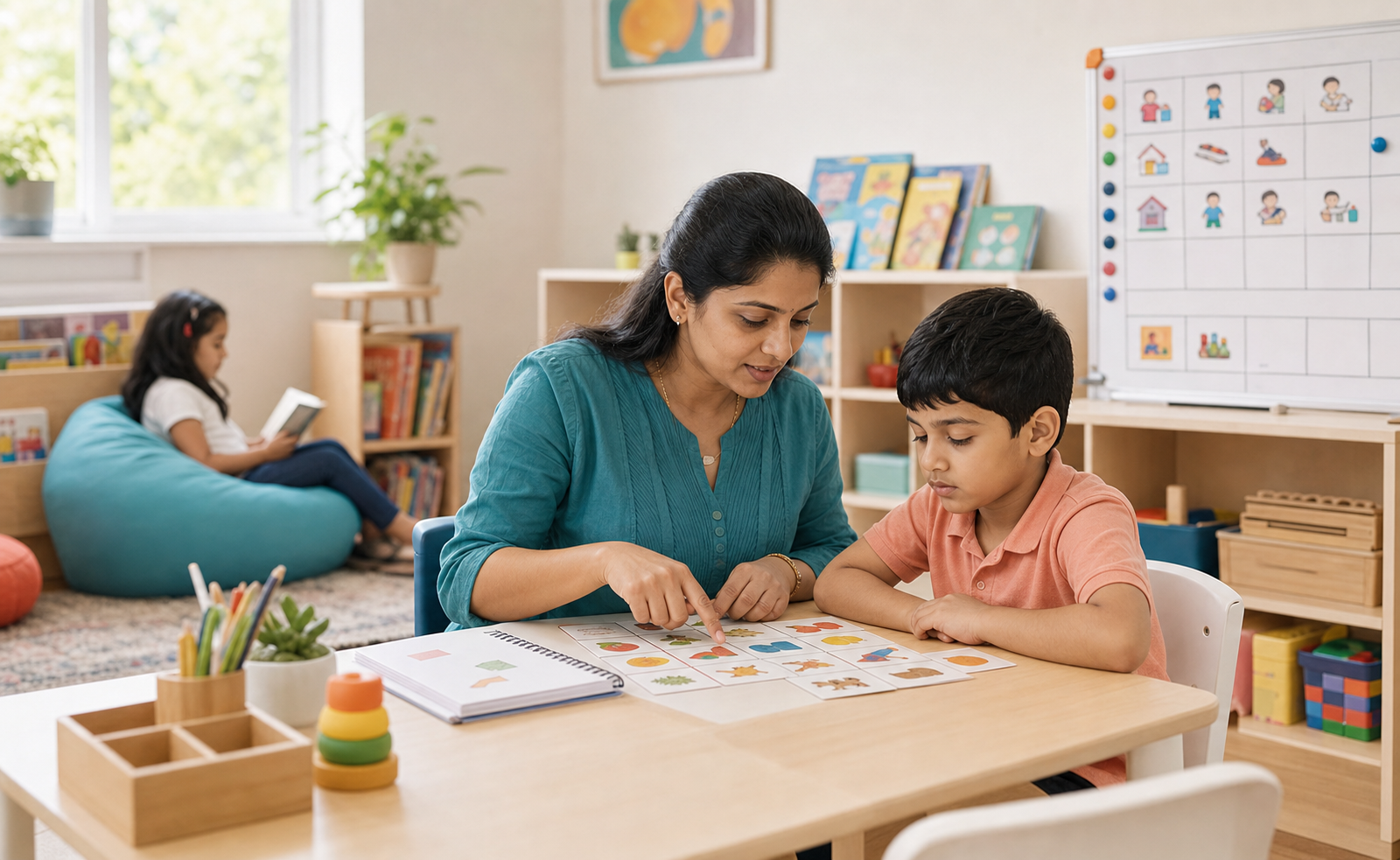
Special education that meets each child where they are today
Structured learning is most effective when it respects a child’s current level, pace, strengths, and emotional readiness instead of forcing comparison with others.
Special education becomes powerful when it starts with a clear and compassionate question: what is this child ready to learn next? That mindset changes everything. Instead of chasing unrealistic milestones, teachers can build lessons that are challenging enough to promote growth and gentle enough to protect motivation.
At Pavani Autism School, structured learning can include visual supports, repeatable routines, smaller learning steps, and intentional reinforcement. These approaches help children understand what is expected and reduce the stress that often blocks participation. Once anxiety lowers, attention and engagement have more room to grow.
Families should know that progress is not only academic. Learning may also look like waiting for a turn, moving from one task to another more calmly, sitting for longer with support, or using a new word at the right moment. These building blocks matter because they support everything else that follows.
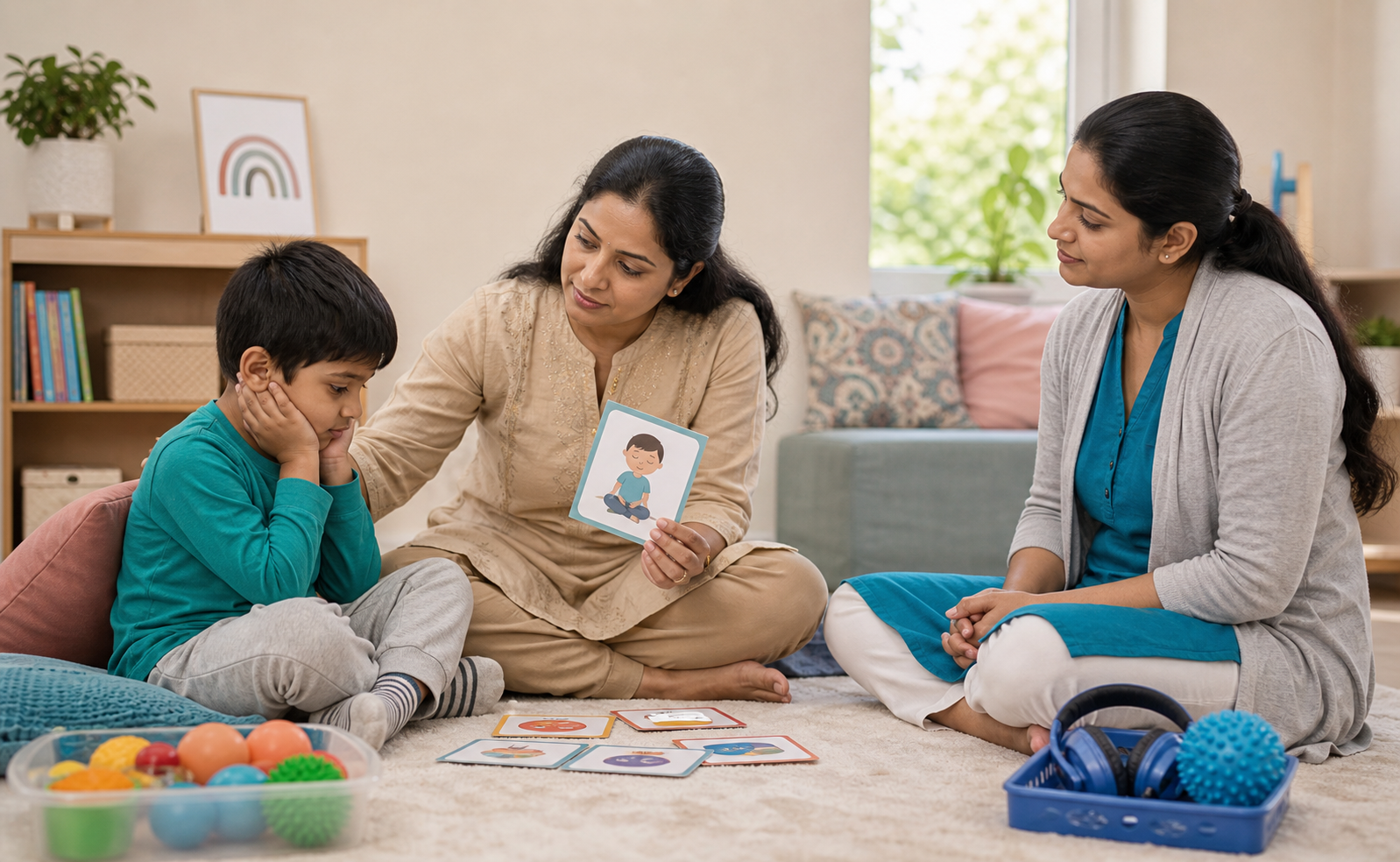
Positive behaviour support without fear, shame, or daily power struggles
Good behaviour support asks what the child is trying to communicate. The answer is often found in stress, confusion, unmet needs, or a skill that has not been built yet.
Behaviour is information. That idea alone can soften a family’s entire approach to difficult moments. Instead of seeing a child as stubborn or uncooperative, adults can ask more helpful questions: Was the transition too sudden? Was the demand unclear? Was the environment too loud? Did the child have another way to ask for a break?
Positive behaviour support does not mean lowering expectations. It means teaching skills while protecting dignity. Children may need visual cues, shorter instructions, rehearsal, sensory breaks, or stronger reinforcement for the exact behaviour adults want to see. When support becomes more specific, conflict usually becomes less frequent.
One of the most useful changes families can make is to focus less on reacting after escalation and more on preparing before it happens. Predictable routines, warning signals before transitions, calm adult tone, and a simple repair plan after hard moments all help children feel safer and more capable.
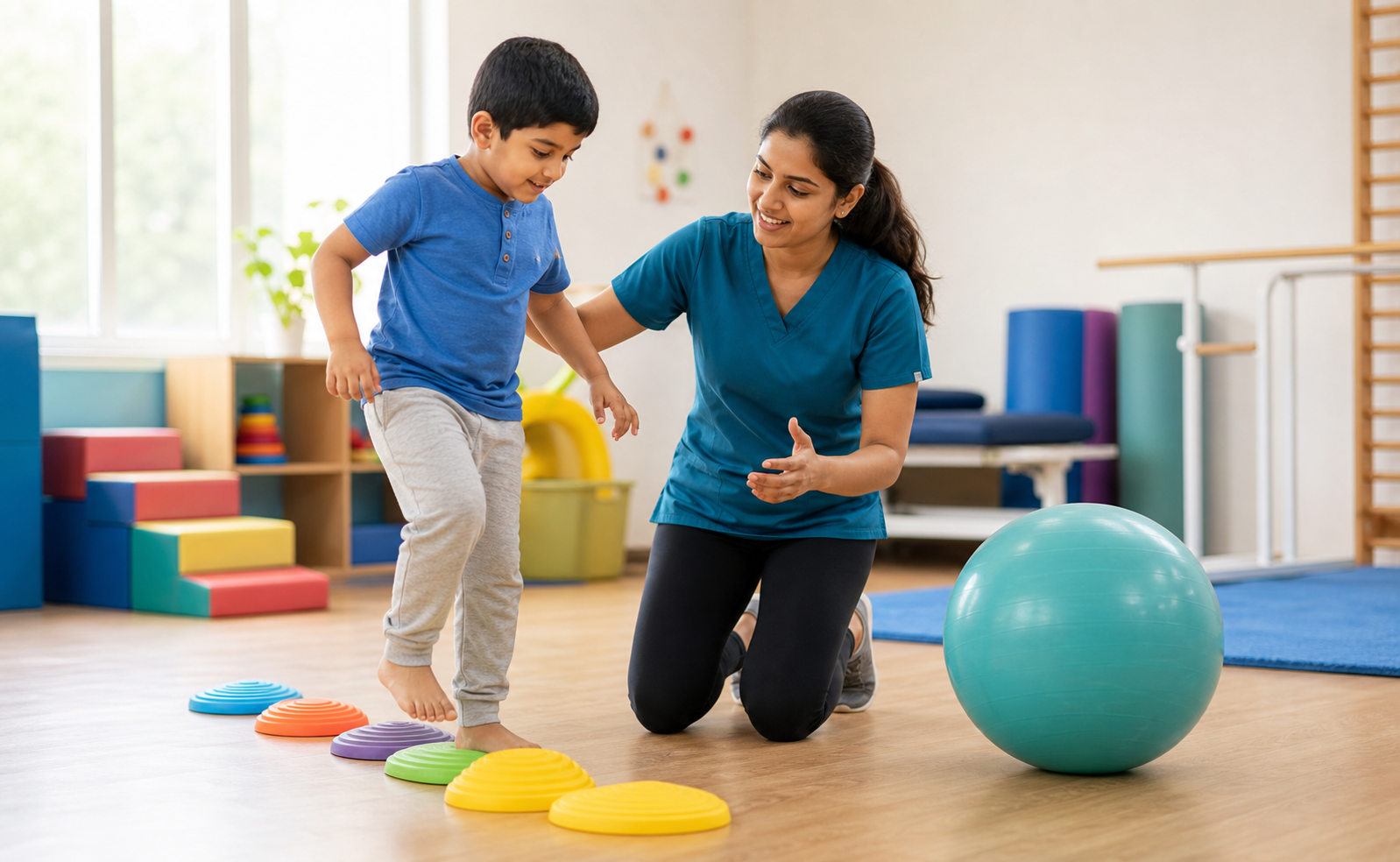
How physiotherapy supports movement, posture, and everyday confidence
Balance, strength, body control, and coordination affect much more than sports. They influence classroom comfort, play confidence, and how safely children move through the day.
Movement shapes experience. A child who tires quickly, struggles with balance, or feels uncertain on stairs, playground surfaces, or classroom seating may avoid participation even when they want to join. Physiotherapy supports the physical foundations that make everyday life feel safer and more manageable.
Improved posture, stronger core control, and better coordination can influence many parts of the school day. Children may sit with more ease, move between activities with less stress, and approach active play with greater willingness. That increased confidence can affect social connection as much as physical function.
When families understand that physical confidence and emotional confidence often grow together, therapy goals make more sense. Progress is not only about stronger muscles. It is also about helping a child trust their own body a little more each day.
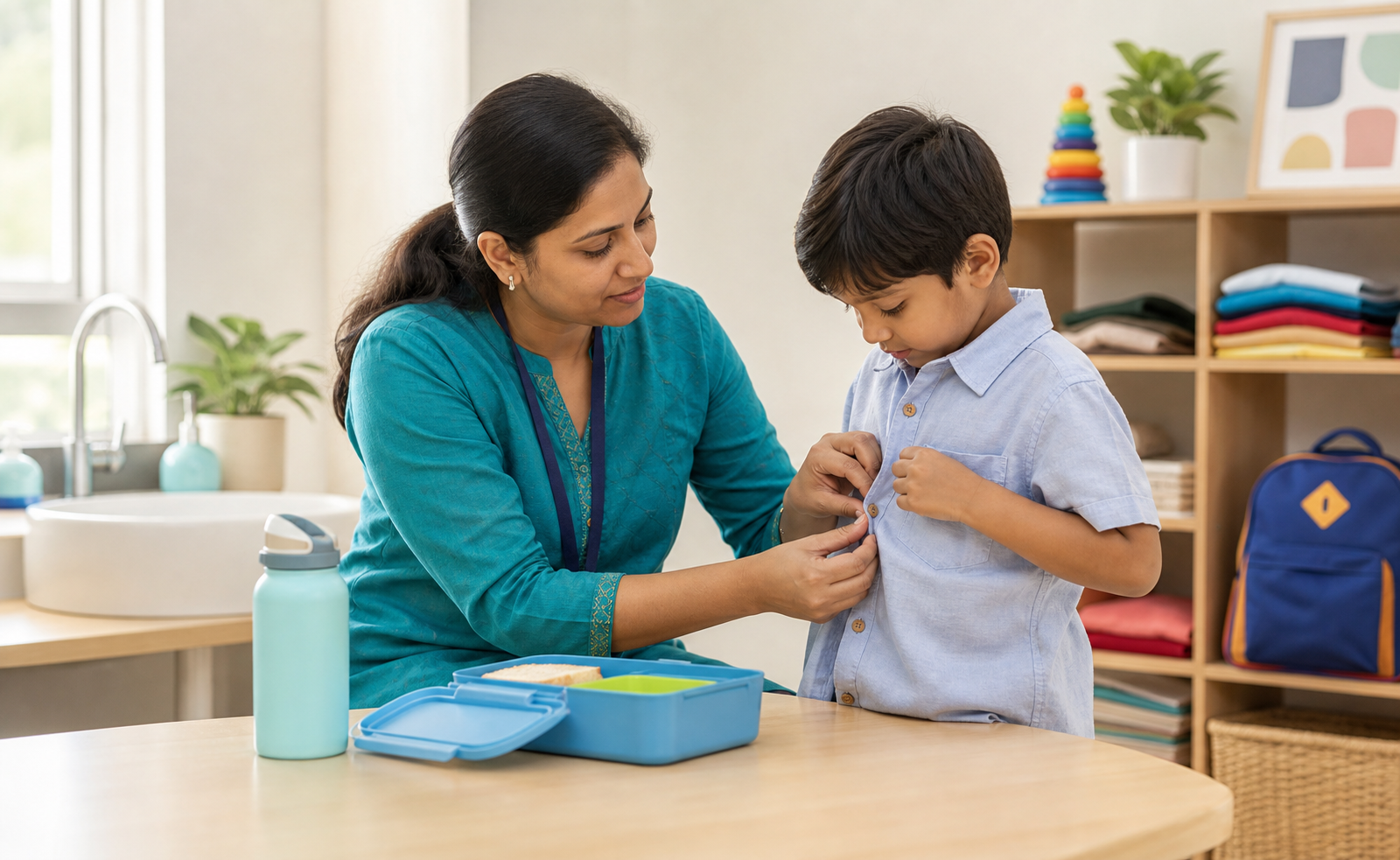
Teaching self-help skills in ways that build dignity and independence
Eating, dressing, hygiene, and toileting are not small goals. They are life-changing skills that help children feel capable in their own bodies and daily routines.
Self-help skills are deeply connected to independence, confidence, and family wellbeing. When a child learns even one new step in dressing, hand washing, feeding, or toileting, daily life often becomes calmer and more hopeful for everyone involved.
The most effective teaching usually breaks a routine into manageable parts. Instead of expecting a child to complete every step at once, adults can teach one step clearly, repeat it often, and build support around success. Visual prompts, predictable order, and the same practice environment help children understand what comes next.
These goals deserve patience and respect. A child is not simply learning a routine. They are learning ownership over their own day. That is why self-help teaching should always protect dignity, use encouragement generously, and celebrate gradual progress.
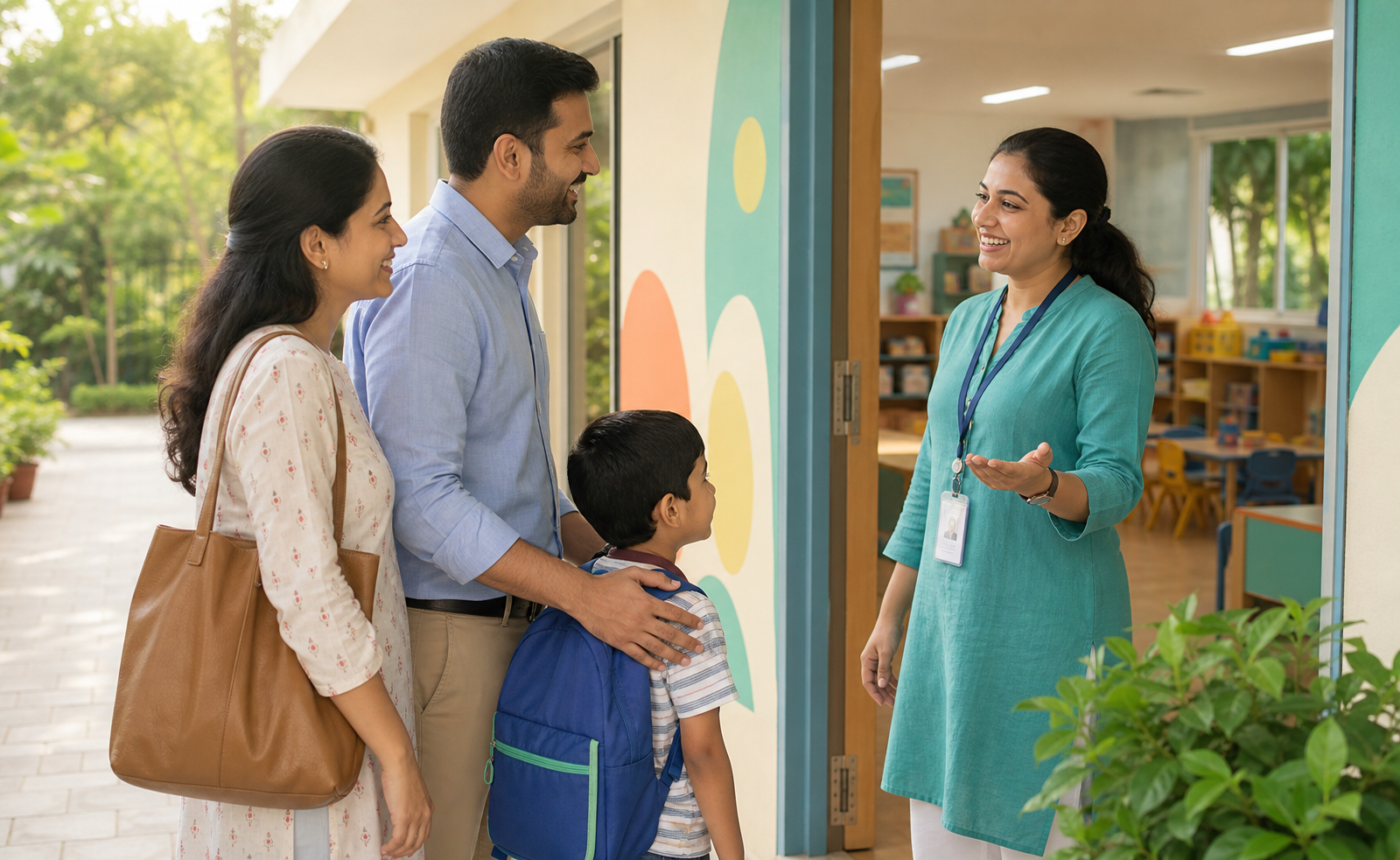
Preparing for your first school tour with calm, clear expectations
A tour is not about being impressive. It is about finding the right fit. Knowing what to observe and what to ask can make your first visit more useful and less stressful.
Many families arrive for a school tour carrying equal parts hope and anxiety. That is completely normal. A visit matters because it gives parents the chance to notice how a place feels, not just how it looks online. Are adults calm? Are transitions supported? Do classrooms feel structured without feeling harsh? Those signals often tell you more than a brochure can.
It helps to come prepared with a few focused questions. Ask how the school supports communication, sensory regulation, independence, and parent partnership. Ask what an ordinary day looks like. Ask how progress is shared with families. The most helpful answers are usually specific and practical rather than overly polished.
A good tour should leave you with clarity. Even if you are still deciding, you should feel more informed, more respected, and more able to imagine what your child’s day could look like in that environment.

From enquiry to admission: making the process feel manageable for families
Admissions should feel guided, not confusing. A clear path from first enquiry to school start helps families focus on fit, readiness, and next steps with confidence.
When families are considering a new school, they are often balancing paperwork with emotion. Questions about therapies, academics, travel, fees, and adjustment all arrive at once. That is why the admissions journey should be simple to follow and transparent at every step.
A helpful admissions path usually begins with a conversation or enquiry, followed by a school tour, a clearer understanding of the child’s needs, and then the practical steps needed to apply. Families also need reassurance around timelines, documents, communication, and what happens after acceptance.
The best process gives parents both structure and breathing room. It helps them gather information without pressure while still moving forward. When admissions is handled with warmth and clarity, families can make decisions from confidence rather than confusion.
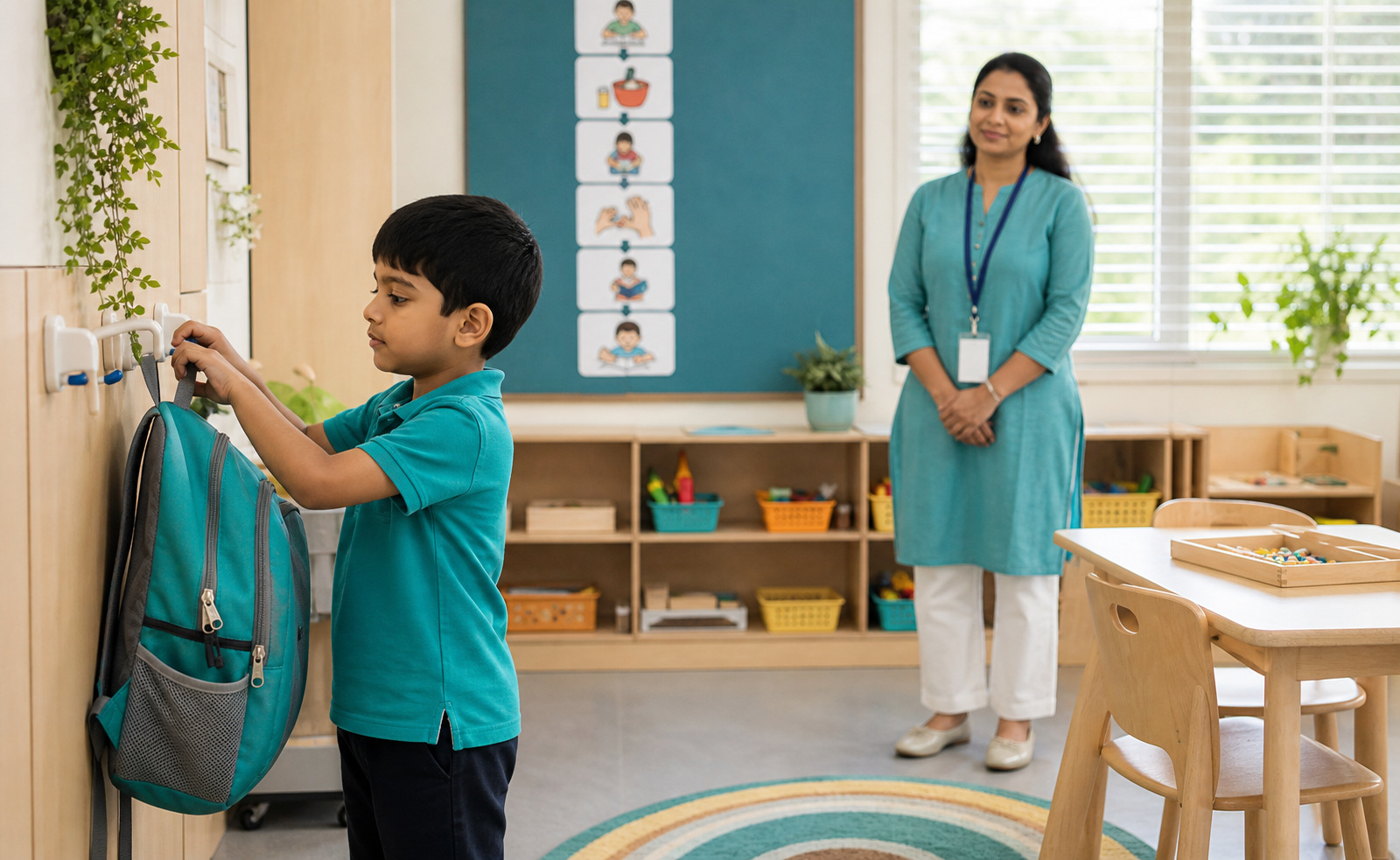
Growing independence through routine, repetition, and respectful support
Independence is built in layers. Children grow when they are given enough structure to feel safe and enough space to try, repeat, and eventually do more on their own.
Every family wants to see their child become more independent, but independence is not created by stepping away too quickly. It grows when support is given carefully, then faded thoughtfully as confidence increases. That process asks adults to observe closely and adjust their help with intention.
Routine is one of the strongest tools for building independence. When the order of events becomes familiar, children can begin anticipating what comes next. That anticipation supports self-initiation. Over time, repeated routines create opportunities for children to take ownership of more steps with less prompting.
Respect matters throughout the process. Independence grows best when adults believe a child is capable, celebrate effort, and treat support as a bridge rather than a permanent limit. That mindset changes how children see themselves, and that change is often as important as the skill itself.